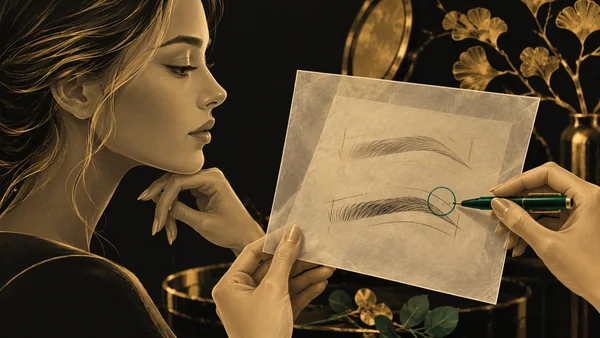
Not to draw a different face, but to enhance yours gently. We agree on the shape, intensity and character of the brow's start in the preliminary design.
POSSIBILITIES IN THIS AREA
Details that matter
01
Powder effect
Ombré, gradient and other soft-shading options are discussed according to your wishes and skin condition.
02
Hair-stroke technique
The visual effect of fine strokes. The technique's suitability is assessed individually; it is not universal for every skin type.
03
Touch-up and refresh
Assessment of the healed result and later renewal. Old permanent makeup by another artist requires a separate consultation.
Cosmetic information does not replace medical consultation. Disclose allergies, medical conditions, medication, pregnancy and previous reactions. Where necessary, the decision is agreed with a doctor. Individual results and timeframes are not guaranteed.
What to assess in the design before permanent makeup for brows, lips or eyes: shape, proportions, boundaries and your own feelings before agreeing to the next stage.
Comparing powder and hair-stroke brow effects: visual differences, your usual makeup, starting features and questions to help you choose your own option.
How to discuss a natural brow shape: your own hairs, facial proportions, expressions, colour and usual look, without trying to copy a popular template.
Different goals call for different conversations. Start with what you want to change, rather than just the name of a technique.
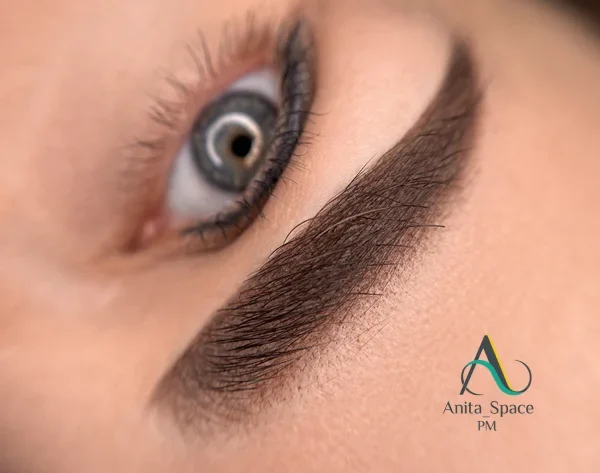
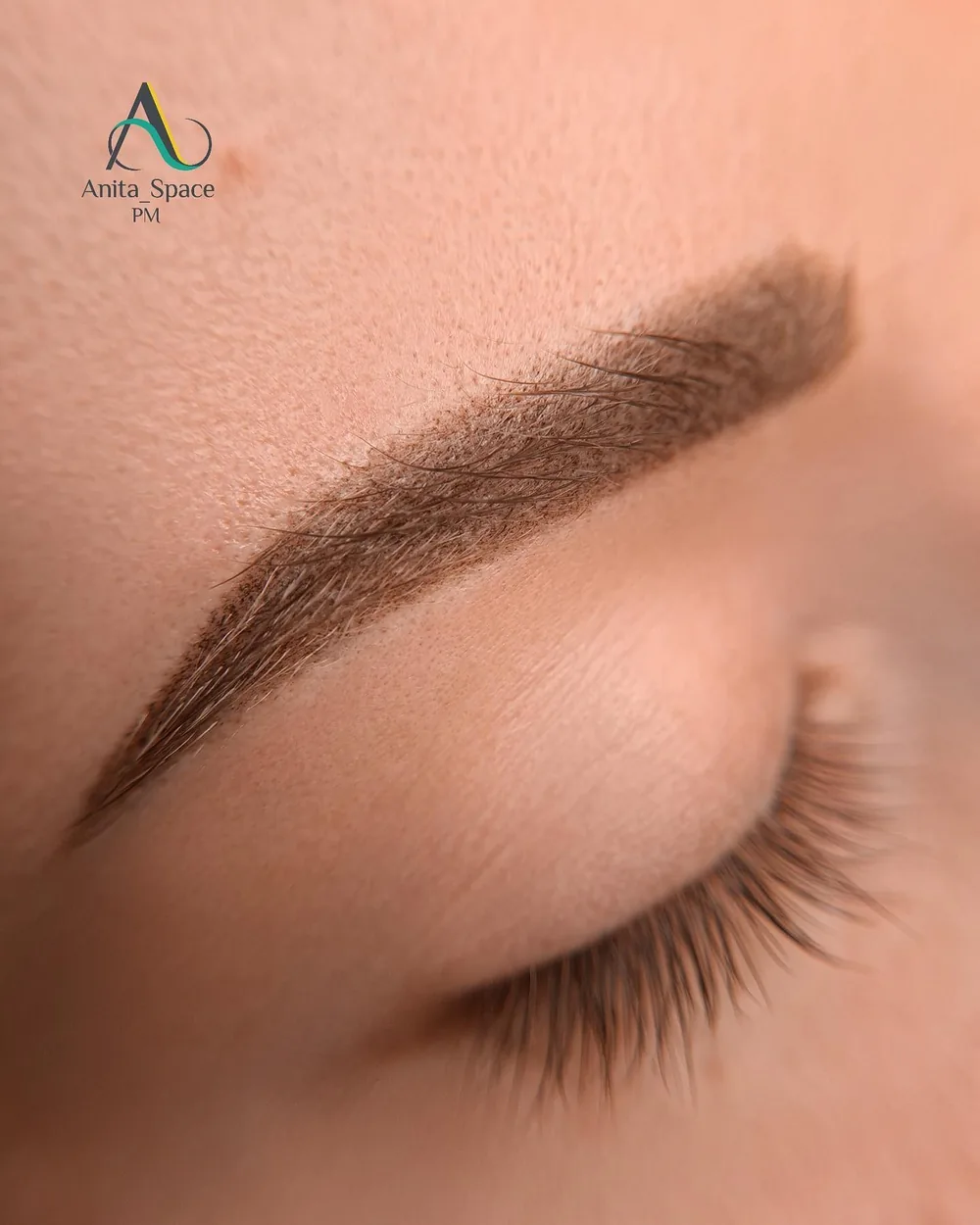
Original photograph from the ANITA SPACE archive. The technique and stage of healing have not been established; this is not a guarantee of the same result.
Tinting or a pigment design?
Start with a specific wish: make the brow hairs more vivid in colour, define the shape or add visual density where it is lacking. Tinting and permanent makeup serve different purposes. When discussing permanent makeup, the planned pigment design on the skin, its shape and its intensity are assessed separately.
The details that define the look
It helps to show how you style your brows every day and identify the detail you are unhappy with: the front, arch, tail or overall definition. Reference photographs help convey the look you want, but the shape should be considered in relation to your own brows and facial features.
Softness, outline and gradient
It is easier to describe the effect you want in terms of how the brow should look: a soft or more defined front, a light upper edge, a more pronounced tail, even or gradually changing intensity. This makes it easier to agree on the intended result than relying on a technique name alone. The educational materials discuss ombré, a more defined contour effect and gradients separately. The common theme is the distribution of colour accents and density. When choosing, discuss not only the striking appearance immediately after the work, but also the result you want to see in everyday life.
This overview brings together archival educational topics. The photograph illustrates the area of work, but does not verify a specific technique, when the work was done or an expected healing outcome.