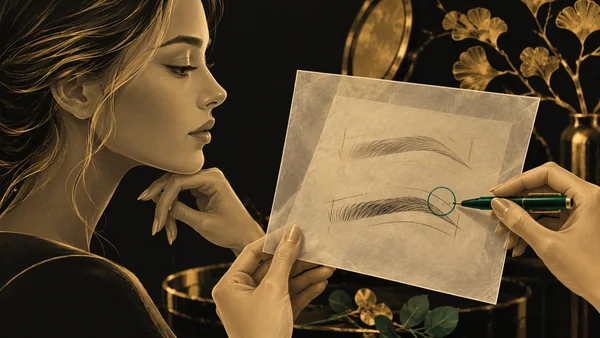


“I want natural brows” can mean different things. For some, it means a barely noticeable enhancement of their own shape. Others find defined brows natural because they have become used to them over years of daily makeup. Finding an individual shape therefore begins not with a universal formula but with a conversation about your face, habits and perception of yourself.
Your own brow hairs provide important context
Consider what you already like about your brows. It might be their fullness, hair direction, soft arch or defined start. Name these features during the consultation so that wanting to enhance something does not become a complete change of appearance. Sometimes the most important wish is simple: I want to preserve the character of my brows.
Clarify separately which detail you are unhappy with. “I do not like my brows at all” leaves plenty of room for interpretation. “I want more definition at the tails” or “I fill in one area every day” describes the request much more precisely. This lets you discuss a specific accent without assuming that you need a different width, arch and colour all at once.
See proportions as a whole
A brow may look striking in an enlarged photo, but that image does not show how it interacts with the whole face. When discussing shape, assess the overall balance: do the brows draw all the attention, do you like the expression of your eyes and do you recognise yourself without your usual makeup? Your own perception matters here.
You do not need to find one correct shape for a face category. Advice such as “everyone with a round face needs this arch” oversimplifies the choice. People with similar overall proportions can have different eye placement, natural brow direction and style preferences. Any formula is better used as a supporting reference for discussion than as a ready-made answer.
Pay attention to facial expression
Your face does not remain still throughout the day. You smile, look surprised, concentrate and raise your brows. It therefore makes sense to assess the shape beyond a frozen image. Ask for time to view the design with your usual expression and point out details that catch your attention in motion.
Pursuing absolute mirror-image symmetry can distract from the overall impression. It is more useful to ask which differences the artist sees and proposes to account for than to demand two mechanically copied lines. Discuss the shape through how it appears on your face, not only by comparing isolated sections.
Colour and definition are individual too
A natural look depends on more than the outline. The prominence you want beside your hair, eyes and usual clothing matters. If you often change your hair colour, mention this. Do not base the entire brow concept on one current shade or one well-lit photograph.
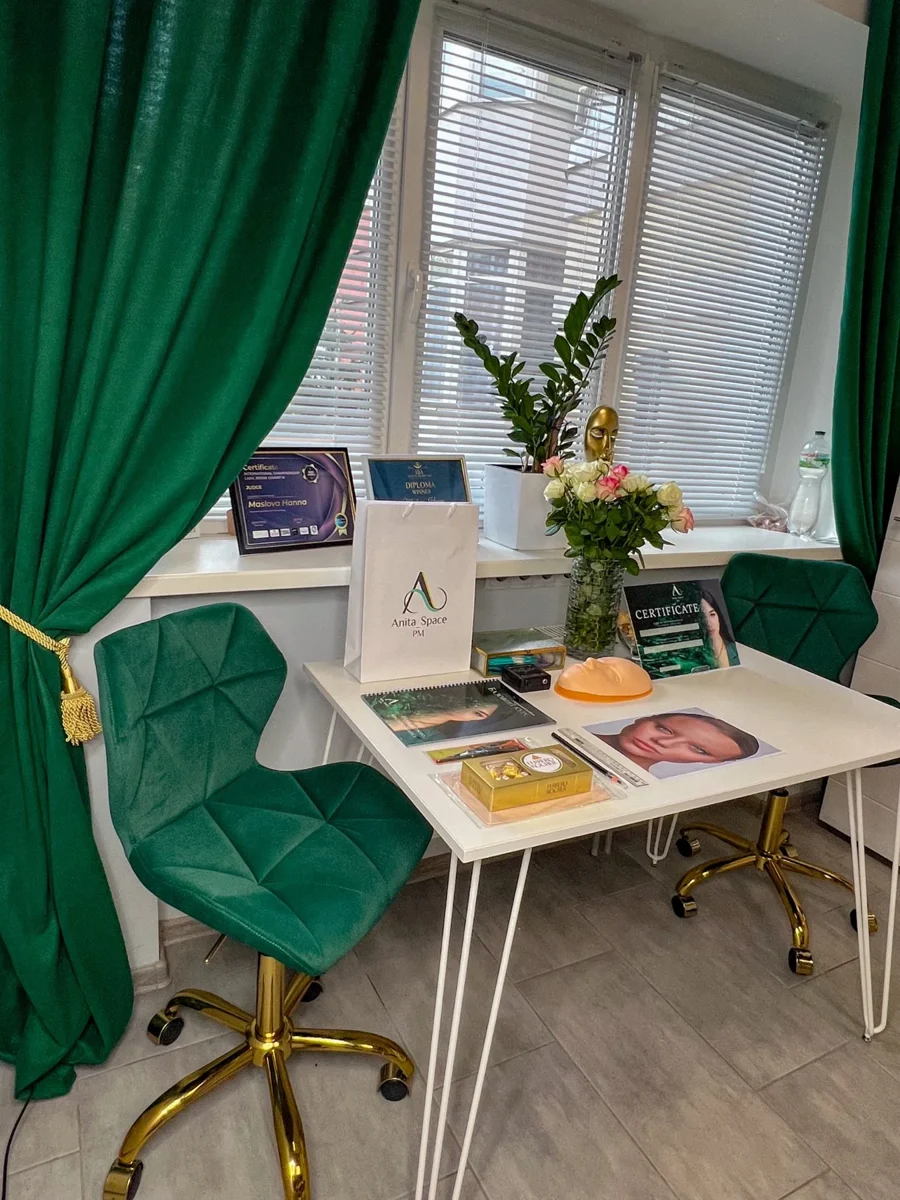
Anita Space explores discussing shape together in the article about the design before treatment. Use this stage to name the changes you want and the features you want to preserve. References can suggest a direction, but your own face remains the main guide. A good discussion leaves room for individuality rather than requiring you to resemble someone else's finished look.