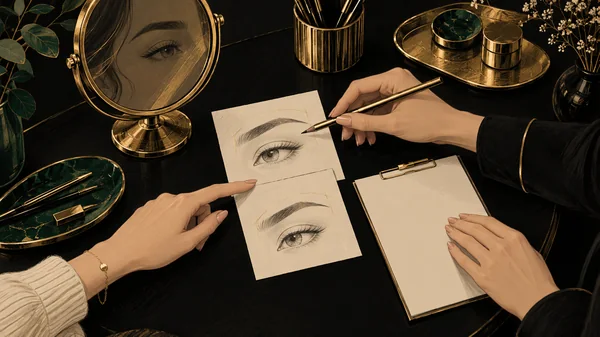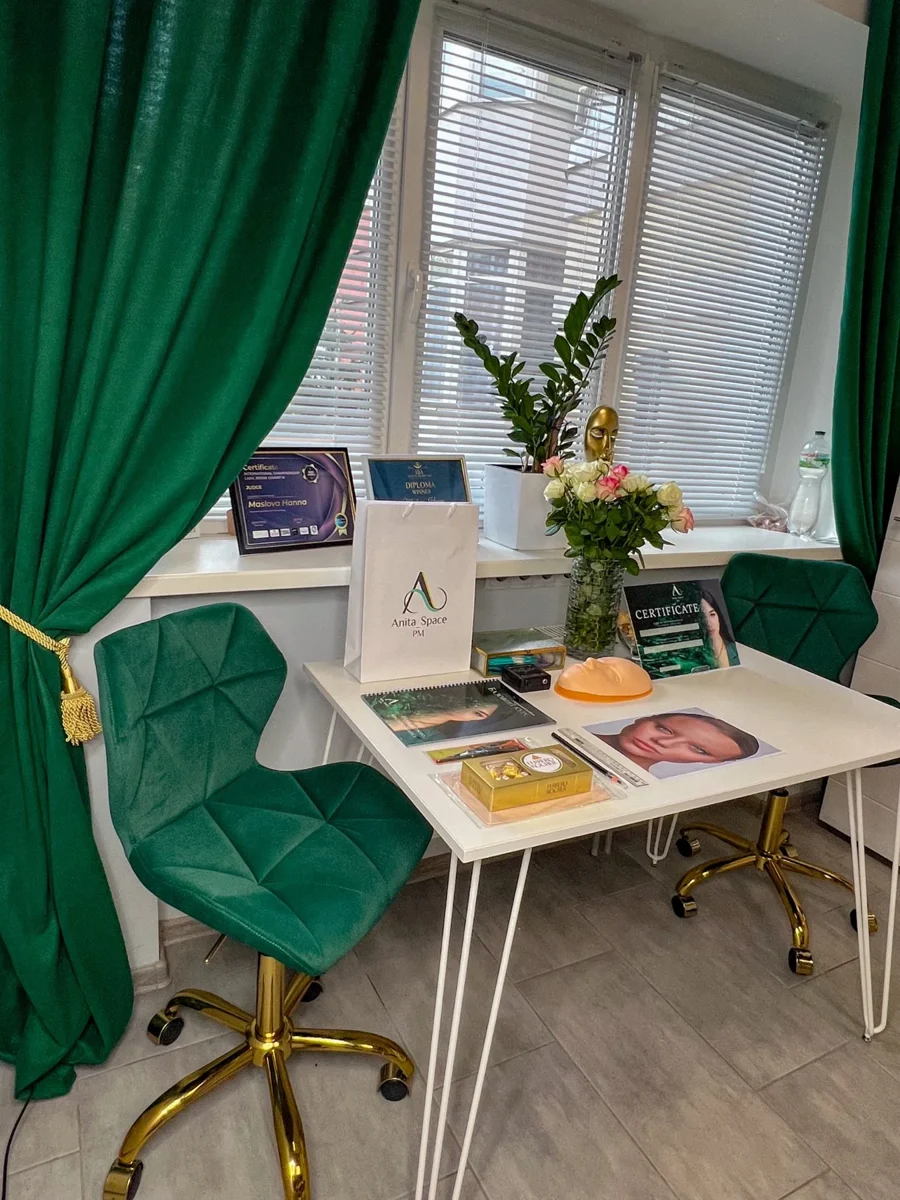


The Anita Space blog has a dedicated article about the preliminary design. Its central idea is simple: before treatment, take time to consider the shape, check the details and discuss your desired result. For the client, this is a chance to see the proposal on their own face and ask questions that are difficult to formulate from photographs of other people's work alone.
What the design shows
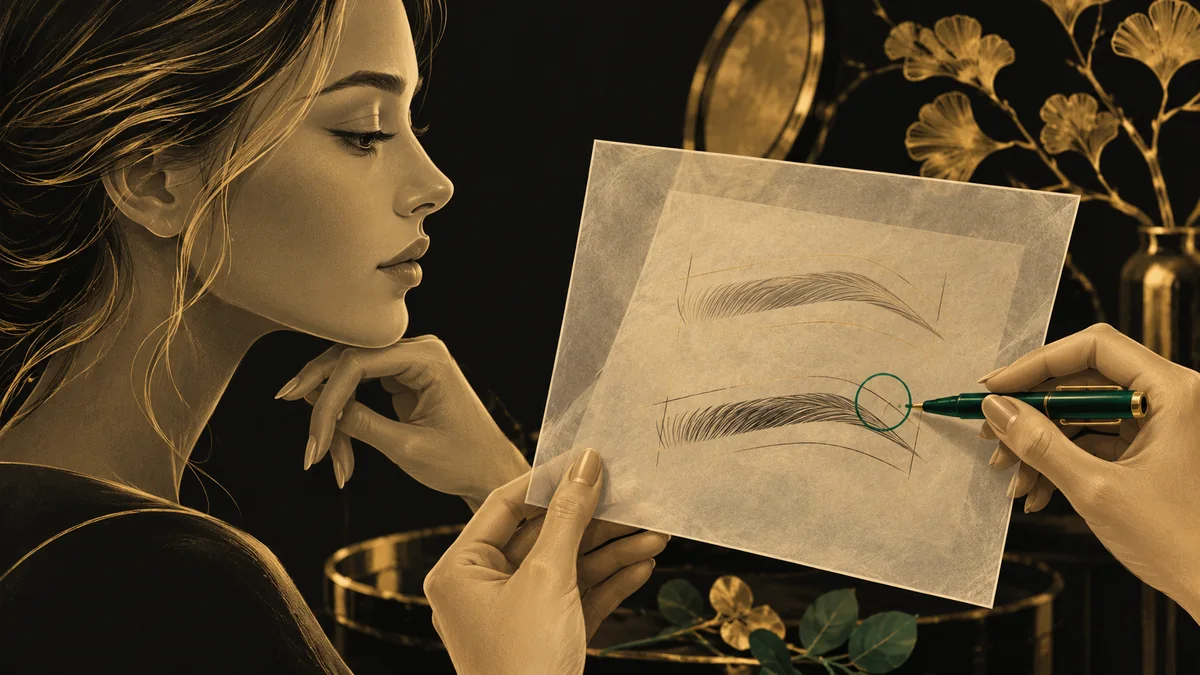
The design helps you discuss the placement and boundaries of the future accent. Depending on the area, this may mean brow width and direction, the lip outline or the character of the line beside the lashes. Think of it as a working visual agreement. You and your artist check that you understand the desired shape in the same way and clarify details before treatment begins.
However, a drawn outline is not an exact photograph of the future result. The drawing product, its density and the visibility of guide lines can create a different impression. Ask what each boundary marks, which areas will be emphasised and where a soft transition will remain. This is particularly helpful if the unfamiliar intensity of the drawing itself worries you.
First, look at your face as a whole
Do not rush to assess just one line in a magnifying mirror. Start with the overall impression: do you recognise yourself, do you like your expression and does the accent seem too noticeable? You can then move on to details and compare them with what you discussed during the consultation.
Look at the design from different comfortable distances, with a relaxed expression and your usual facial movements. The aim is to understand your own perception of the shape. If you usually see yourself wearing glasses at home, it also makes sense to assess the overall impression with them on. The design should suit your real everyday appearance.
Check the specific features
For brows, you can discuss the start, width, arch and tail. For lips, the outline's appearance and the balance between the upper and lower lip matter. For eyes, clarify whether the aim is a delicate accent along the lashes or more noticeable winged eyeliner. Instead of a general “something is wrong”, try to identify the area that raises doubts.
A sense of unfamiliarity also deserves attention. It does not oblige you to agree, nor does it always mean the entire design is wrong. Sometimes comparing the initial version with a more restrained one is enough. Ask the artist to explain how adjusting a particular detail changes the overall impression. This makes the decision informed rather than rushed.
Agreement should be clear
It is important to distinguish the shape you can see from the intensity you are still discussing. You might agree on brow width but remain undecided about colour intensity. Or approve the lip outline and ask for a fuller explanation of a more translucent versus more defined effect. Name these questions separately so that no part of the decision is left to chance.
Do not approve a design out of politeness. If you need time or more explanation, say so directly. Discussing it together is a meaningful part of the choice, not a formality. You can revisit Anita Space's original article on the importance of the design. The key point for the client is that, before the next stage, you should understand exactly which shape you have agreed on and which details still need answers.