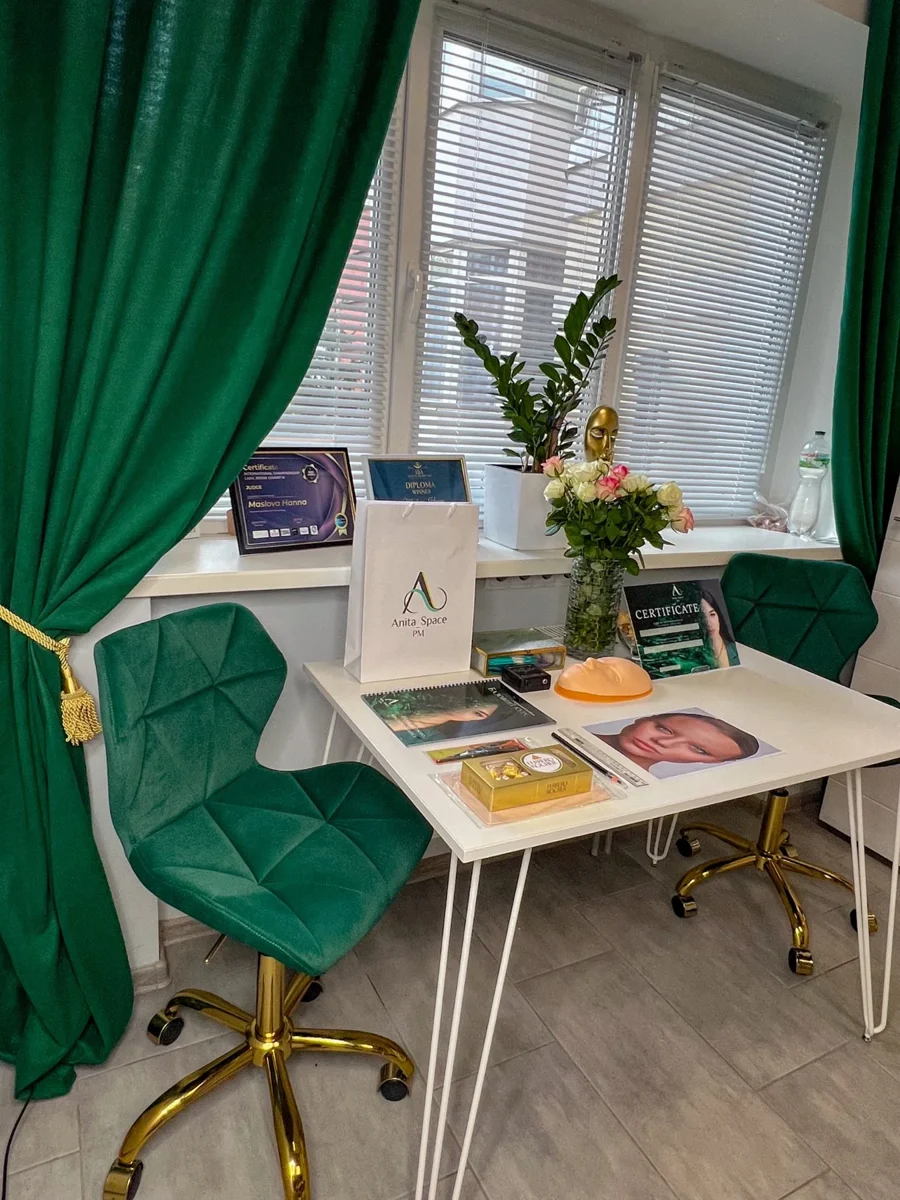



As initial uncertainty fades, an artist develops more precise questions. Why do some decisions come easily while others need constant checking? At which stage does a difficulty arise? What should change in your approach to better understand the result? These questions can form the substance of advanced training.
At Anita Space, this format is intended for practising artists with unresolved practical issues. The most useful course preparation therefore begins with a careful look at your own practice. The more specific the request, the easier it is to discuss it with the educator and establish whether the training meets your needs.
Replace a general wish with a specific question
“I want to work better” is understandable but leaves too much room for interpretation. Try identifying the stage that causes difficulty: discussing expectations, choosing an aesthetic solution, design work, understanding colour, assessing photographs or analysing healed work.
Then separate observation from your own explanation. “I see a difference in the before-and-after photos that I cannot explain” is more precise than a confident assumption about a single cause. This leaves room for professional analysis rather than seeking confirmation of a conclusion already reached.
Choose a few priority questions. A long list of every professional topic can prevent you from focusing on what is truly holding your work back now. Identify which question needs attention first and exactly what you would like to understand after the class.
Prepare a case that can be discussed
Context matters in a training review: what was requested, what was agreed, which difficulties you noticed and which materials you still have. If photographs from different stages are available, label them clearly. Do not present fresh work as healed or alter colours to make a better impression.
Protect your client's privacy. Before using their material in training, agree on that specific use and avoid including unnecessary personal information. Without permission, formulate the professional question without photographs or identifying details. A difficult case should not become a public story simply because it is useful for analysis.
What Anita Space lists
The published programme includes colour theory, equipment, needle configuration selection, technical questions, design and error analysis. It provides for practice on one or two models and a demonstration. Photography and video for presenting work, a certificate and ongoing post-course support are listed separately.
Before enrolling, clarify how these modules relate to your specific request, what support means in practice and how work with models is organised. Also discuss in advance whether your current foundation is sufficient for the chosen topic. Sometimes revisiting fundamentals is more useful than learning a new technique.
How to assess the value after training
Return to your initial list of questions and record what has become clear. Separately note what still needs practice, another review or further preparation. Choose a way to check progress, such as consistently documenting work and analysing the educator's comments.
A certificate confirms completion of training, but the main practical value appears in decisions. If an artist can explain their actions more thoughtfully, recognise the limits of their competence and ask more precise questions, learning has continued into everyday practice.