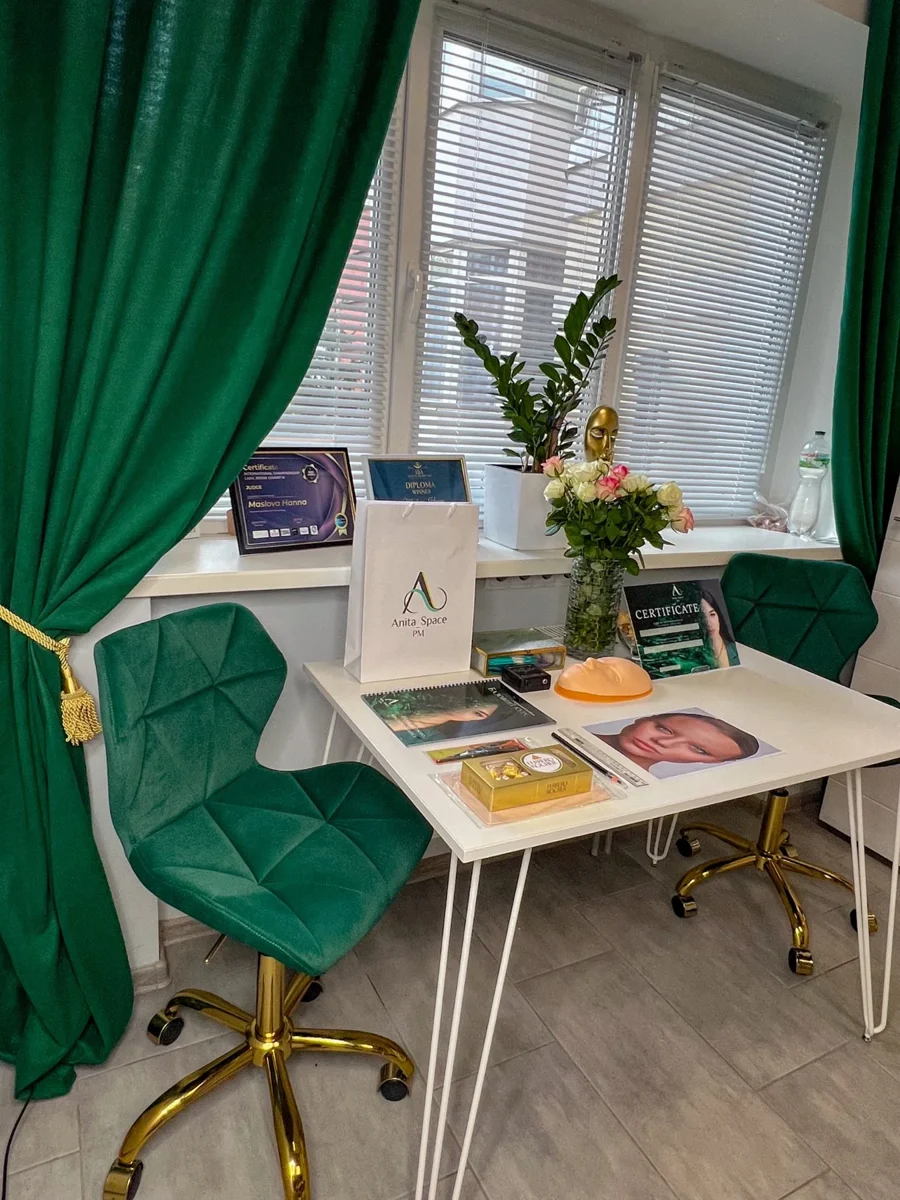



After the first treatment, a natural question arises: when should you come back, and which service should you book? Anita Space lists both touch-ups and refreshes, so it is worth understanding their purposes before choosing a date. The name of the repeat visit should reflect the state of the work and your needs, not simply the number of months on the calendar.
What a touch-up is for
A touch-up usually means the next stage after the initial treatment. It is discussed once the healed result can be assessed: shade evenness, visual density, individual areas and how well it matches the agreed design. At this appointment, it is important not simply to ask for “more colour”, but to explain exactly what you would like to refine.
For example, you may like the overall character of your brows but want to discuss their definition. Or the lip colour may meet your expectations, while you want to understand whether a particular area needs additional work. These are examples of questions for assessment, not remote indications for adding more pigment. Sometimes observation, rather than an immediate treatment, is the appropriate decision.
What a refresh is for
A refresh means renewing previously completed permanent makeup when the client wants to discuss its definition again. It involves assessing what remains in the skin and the result wanted now. It is important to say whether you are happy with the previous shape, colour character and overall impression.
If the request concerns a completely different shape or a pronounced unwanted shade, the word “refresh” does not yet describe the required plan. The artist needs to see the starting situation. Booking under a lower price or shorter service name should not replace an initial assessment. This is especially important when another practitioner carried out the original work.
Why there is no single correct date
Do not apply another person's timetable to yourself. Instead, ask why a particular follow-up visit is proposed: to show the result, clarify an aesthetic preference or discuss additional work. Ask to separate these purposes. Agreeing to a review does not mean a procedure must be performed at that appointment. It also helps to know how the plan can change if you have not yet decided on the desired definition.
During the consultation, agree on when to show the result and which criteria will guide the decision. Clarify practical arrangements separately: whether a review is included in the price, how repeat work is priced and what happens if an appointment needs to be rescheduled. Transparent answers are more useful than a promise of the same schedule for everyone.
What to prepare for the conversation
Gather the date of your previous treatment, the area treated, information about earlier refreshes and unfiltered photographs. Write two short lists: what you already like and what raises questions. If there were unusual reactions or medical treatment, mention them before booking, not at the end of the appointment.
Do not set yourself the goal of necessarily adding pigment at every review. The FDA notes that permanent makeup is difficult to remove. It is therefore worth asking: “What specific problem will the next stage address?” If there is no clear answer yet, a calm pause lets you return to the decision without unnecessary haste.
For a consultation at Anita Space, start by describing the previous work and the changes you would like. Agree on the final service name and plan after assessment, leaving yourself the opportunity to ask every question.