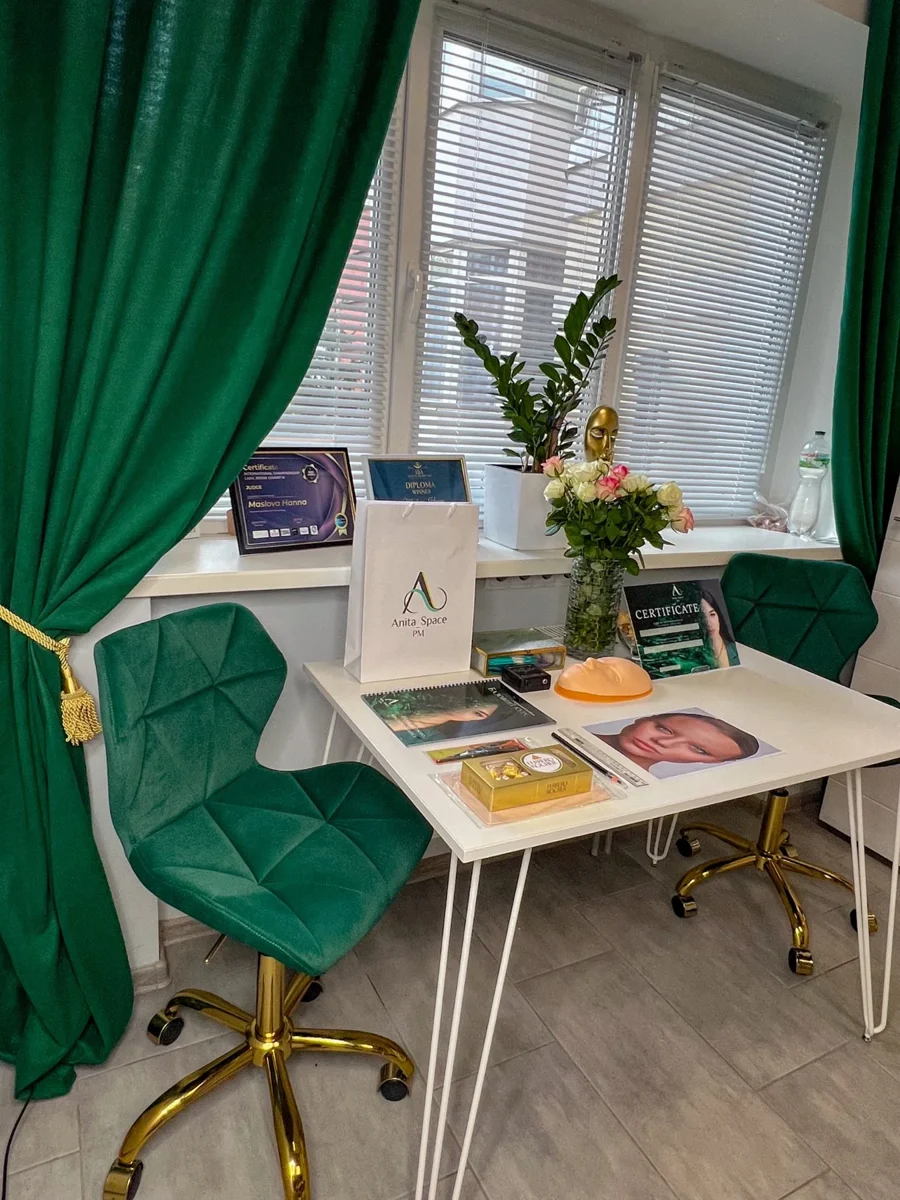



A first permanent makeup course helps build a complete picture of the profession. Before training, it is easy to focus on the visible result: beautiful brows, a delicate lip colour or expressive eyes. Yet behind a photograph are decisions that a beginner is only starting to notice. How do you understand a person's wishes? What should you consider when agreeing on a shape? When is your own knowledge not enough to take on the work?
A foundation programme is intended to introduce these questions step by step. It should provide a basis for further learning and practice, not create the impression that professional development ends after the final class.
How FULL is structured at Anita Space
The published FULL programme includes online preparation and six training days. The preliminary module introduces some theory and includes practising strokes on paper. This is followed by theoretical topics, work on practice skin, educator demonstrations and practice on models in the brow, lip and lash-line areas.
Listed topics include colour theory, pigment science, equipment, design mapping, workstation preparation, contraindications and aftercare. Portfolio creation, remover theory and an SMM module are also specified. This sequence introduces different elements of the work rather than reducing learning to copying the educator's movements.
Why beginners are introduced to three areas
Brows, lips and lash-line enhancement require different ways of approaching an aesthetic goal. A broad foundation programme helps you compare these areas and understand which interests you most. However, being introduced to several areas does not mean being equally ready to handle every request.
After each practical module, it helps to ask yourself: what can I explain independently, where do I still need guidance and which decisions remain unclear? This short review shows progress more accurately than a general feeling that “it seemed to go well”. If a topic needs revisiting, that is a normal part of learning.
What to take away from your first course
A good foundation shows itself in specific habits. A student listens carefully to the request, can explain the proposed shape, asks clarifying questions and understands their own limits. They distinguish the immediate result from the healed one, do not promise an exact copy of someone else's photograph and know when to seek the educator's help.
The Anita Space blog describes design work as a skill developed through training. This is an important reference point for beginners: rather than looking for “innate talent”, learn to check your decisions and discuss them with the person. Feedback is useful when it explains the reason behind a comment and the direction for further practice.
What to clarify before enrolling
Ask for the current timetable and an explanation of how demonstrations, independent practice and work reviews are divided. Find out what the fee includes, how models are arranged and whether questions can be discussed after that particular cohort finishes. The published syllabus gives you an overview, but practical arrangements are best agreed separately.
Set aside time in advance for preparation and for consolidating the material afterwards. Intensive classes provide a lot of information; your own notes, photographs of training stages with the model's consent and a list of questions help preserve what matters. Returning to these materials makes subsequent practice more purposeful.
FULL suits those who want to begin with a broad foundation. Assess its value by how clearly you come to understand professional reasoning, not by promises of quick income or flawless work after a few days.