

Preparing for a consultation does not require choosing a removal method yourself or looking for a treatment protocol. Your task is simpler: gather the information you already have, recall important circumstances and formulate your questions. This lets you use the meeting to discuss your particular situation rather than reconstructing the history in a hurry.
Create a short timeline
Note the approximate timing of the initial treatment, subsequent touch-ups, refreshes and any removal attempts. If different artists were involved, record that. You do not need a perfect archive: a few lines with an honest “I do not remember the exact date” are more useful than a confident but incorrect answer.
Add what changed each time: shape, intensity, shade or a particular area. If you still have messages from the artist, material names or photographs of pigment packaging, prepare them for review. Do not infer ingredients from a bottle's colour or the name of a technique.
Choose photographs from different stages
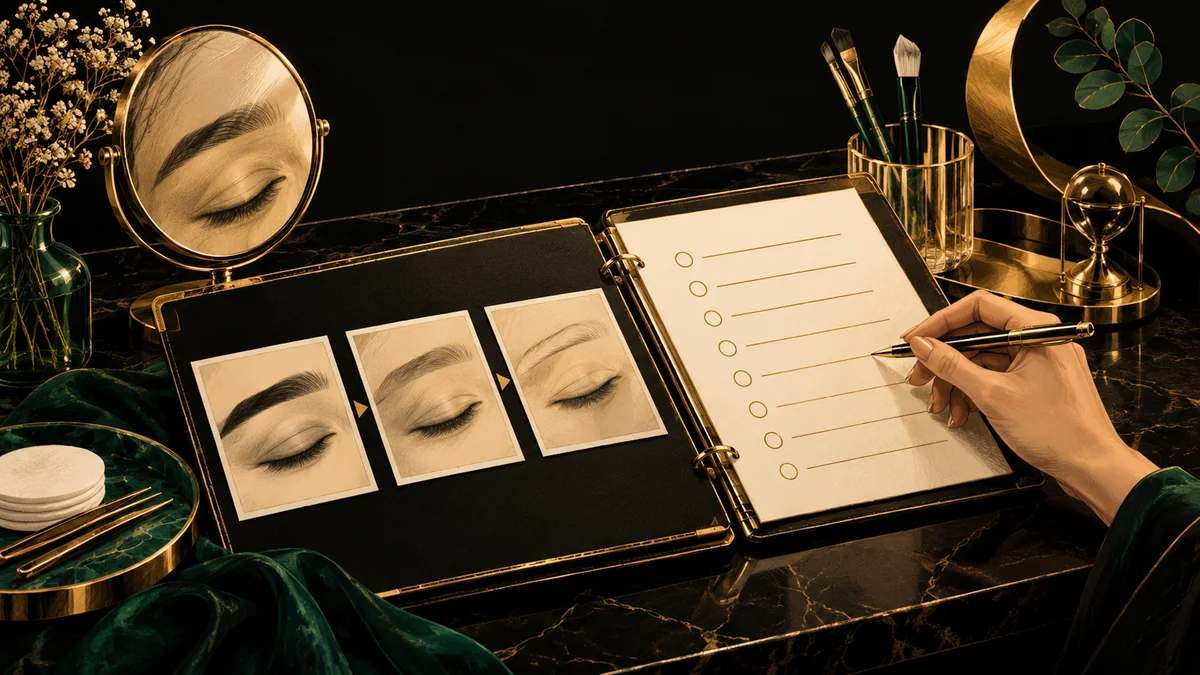
A current image and a few earlier ones, if available, are useful. Label what you know: which treatment the image relates to and whether it was taken immediately afterwards. If you do not remember the exact stage, do not present it as a healed result.
For the current condition, choose clear, unfiltered photographs. Avoid excessive retouching and strong coloured lighting. Before sending them, ask the studio which angles are needed and which channel to use. You do not need to share your entire personal photo archive; images relevant to the enquiry are enough.
Prepare to discuss health
The American Academy of Dermatology includes general health, medication use and a history of raised scars in the assessment before laser removal. Prepare a list of your medicines and recall previous adverse reactions in advance. Address medical questions to a doctor; do not stop prescribed treatment yourself for the appointment. AAD recommendations.
Report any discomfort or changes in the permanent makeup area. Rather than giving your own diagnosis, describe what you notice and when it began. If you have a dermatologist's report, ask whether to bring it to the consultation. Do not hide important circumstances out of fear that the treatment will be postponed.
Identify your three main questions
Start with your greatest concern. For some people, this is the possibility of colour changes; for others, aftercare arrangements or the limits of the eventual result. A written list helps you remember what matters during the conversation and distinguish personal priorities from general advertising descriptions.
Also ask who performs the procedure, what training they have, when a doctor's consultation is needed and how contact after the visit is organised. Clarify which instructions you will receive in writing. It is helpful to understand not only “what will be done” but also whom to contact with later questions.
End the appointment with a clear summary
Before leaving, check that you understood the recommendation in the same way: the next step, what needs further clarification and whether you still need time to decide. Ask for unfamiliar words to be explained in everyday language. You do not have to agree to a procedure simply because a consultation has taken place.
If contacting Anita Space, clarify the available format for the initial conversation and the requirements for materials. A prepared history and specific questions help you begin with facts. A consultation should leave you with greater understanding, even if its outcome is a pause or further medical assessment.